Mercy Home celebrated Latiné Heritage Month this year through activities that explored the rich histories, diverse traditions, and cultural contributions of Latiné communities, inspiring learning and strengthening connections among young people and coworkers. The celebration runs from September 15 through October 15 each year.
This year’s observance focused on several different activities, including a workshop to make papel picado (traditional Mexican folk art made by cutting intricate, geometric, or figurative designs into brightly colored sheets of tissue paper) during dinner, a chance to learn about the Puerto Rican art of Bomba, and games of loteria (a traditional Mexican board game of chance, similar to bingo).
Marc Velasquez, Edgar Zavala, Judy Tapia, Veronica Quintero, and Felicia Hernandez worked together to plan this year’s events.
“We chose the group activities that the youth have enjoyed in the past: loteria, pinata, a craft activity, and a musical act,” Zavala said. “This year we made sure to highlight the theme of Unidos, Somos Más (together, we are more) to unite all our backgrounds and celebrate as one group.”
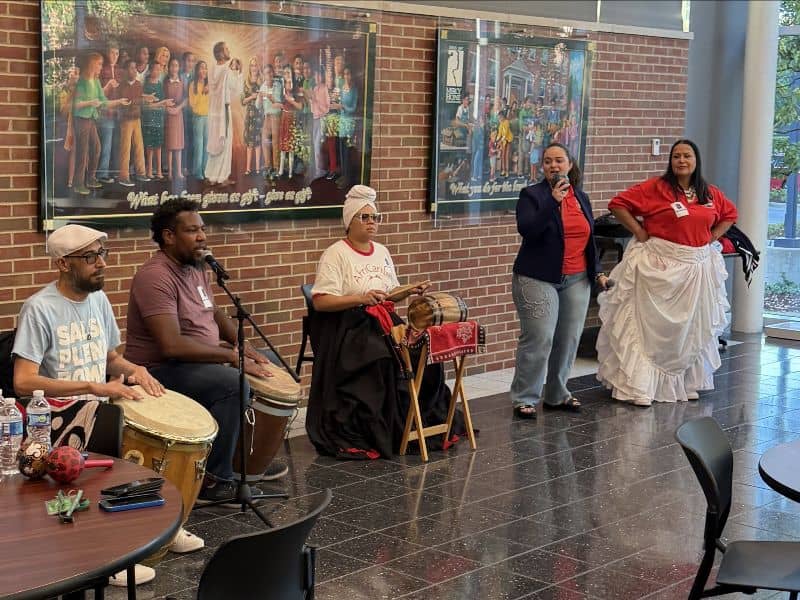
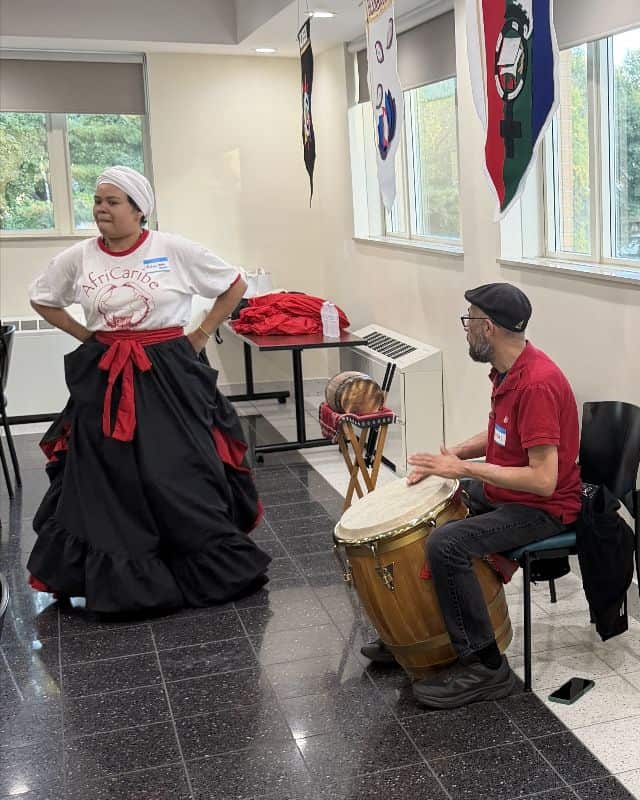
The highlight of the month was the presentation from AfriCaribe, a nonprofit organization dedicated to the preservation, research, promotion, and development of the Puerto Rican and Caribbean cultures through music, dance, theater, and other artistic media. Hernandez has been a member of this organization since 2007 and teaches Bomba dance classes. She was able to connect the group with Mercy Home for this year’s Latiné Heritage celebrations.
Hernandez explained that AfriCaribe’s presentation was designed to teach the history of Bomba, including its roots of West Africa’s influence in Puerto Rico and the way Bomba represents the sacred practice of liberation, as well as a way to talk about history.
“[Bomba] is a way we celebrate our culture,” she said.
Because Bomba requires the dancers and drummers to work together and anticipate the movements of one another, it represents a kind of communication, which is exactly what AfriCaribe hoped to teach the youth at Mercy Home.
The young people then had the opportunity to join group and dance. Hernandez said that she was pleasantly surprised by how many of our young people at both campuses participated, including some youth who tended to be shy. Hernandez chalked that up to the power of music therapy.
“Research on music therapy shows that the sounds of the drums and that frequency is healing,” she said. “It was very beautiful … the [youth] were emotional and it was very powerful.”
Velasquez echoed that the youth participation in this year’s events, especially the Bomba presentation, showed their engagement in the activities planned.
“They really enjoyed the dance night, and it was great to see,” he said. “I thought the guys would be a little bit shy, but a lot of them got up and participated and had a good time with it.”
Velasquez also explained why celebrating cultural events like Latiné Heritage Month is so important and in line with the work we do here at Mercy Home.
“For our kids who are Latino, it’s really important for them to be able to see their own culture represented and their own celebrations represented in a meaningful way,” he said. “And for the kids who aren’t, it’s important for them to be exposed to different ways that other cultures experience the world.”
Mercy Home wrapped up the activities by creating an ofrenda to mark Día de los Muertos, November 1-2. The celebration coincides with the Catholic feasts of All Saints’ Day and All Souls’ Day while also reflecting longstanding Mexican traditions of honoring deceased loved ones. Both coworkers and youth are invited to bring photos of loved ones who have passed away to put on the ofrenda.
Comments