A visit from a family member of a former Mercy Home president gives us head start on next year’s observance of our 140th anniversary.
Retired Chicago librarian Rose Powers was working on completing a history of Dominican University that was left unfinished following the death in 2018 of its first author and university archivist Sr. Jeanne Crapo, OP. While researching the project, Powers came across the name Monsignor C.J. Quille. In addition to being Mercy Home’s third president, Msgr. Quille was a great uncle of Powers’ husband Tony, also a former CPL librarian.
Now, with the help of Dominican University graduate student and archivist David Streicher, Powers is delving deeper into the historical record for a research project about Fr. Quille, and A.G. Quille, who succeeded his brother as Mercy Home’s president in 1929. Powers hopes it will provide added information about her family’s history.
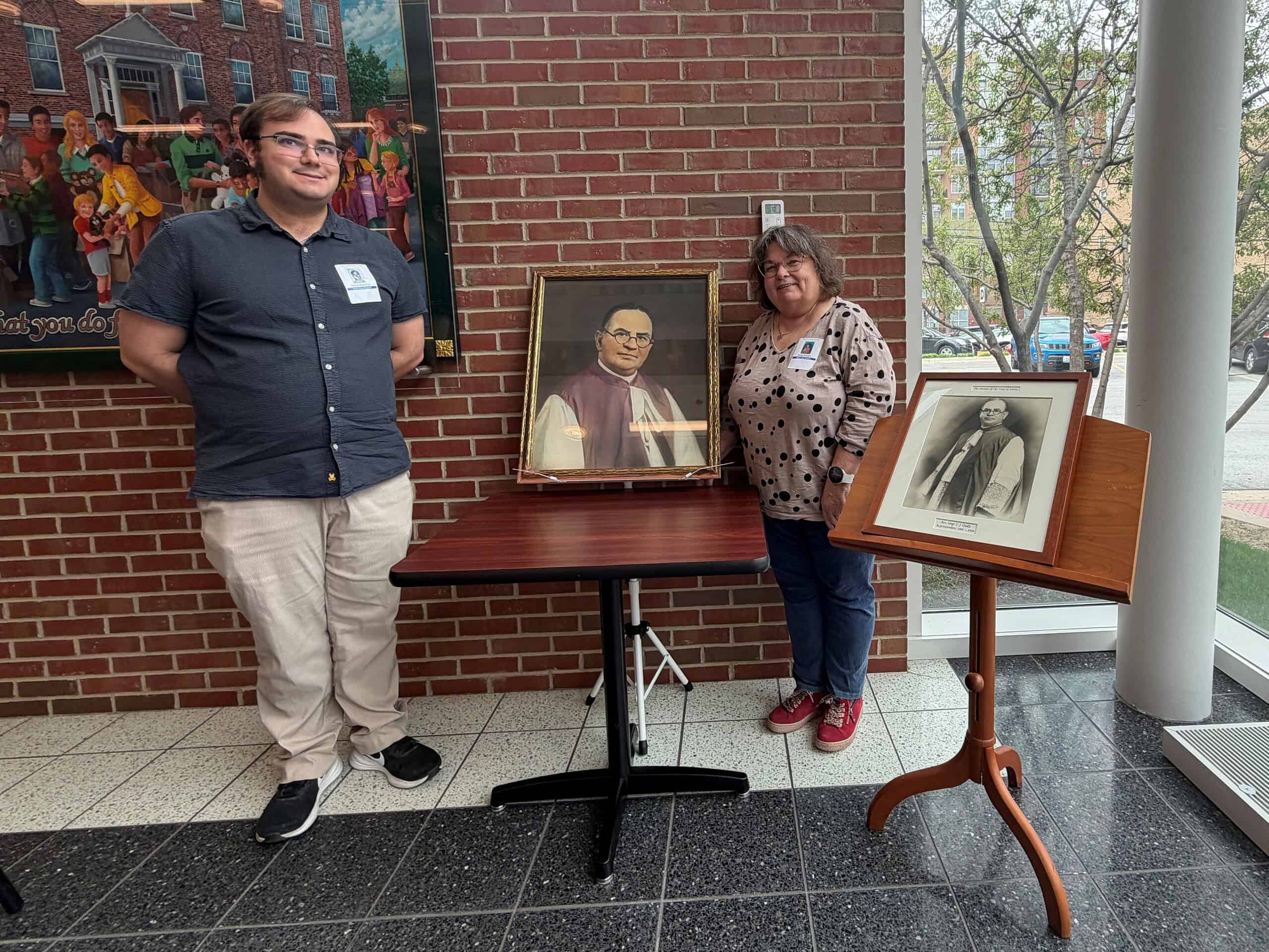
Powers and Streicher visited the Home this spring to learn more about the Quille’s legacy at Mercy Home. Mercy Home coworkers met with the researchers and showed them official portraits of the former president, a visionary who guided the institution during a pivotal period of its growth amid a backdrop of some of the most significant events of the 20th century.
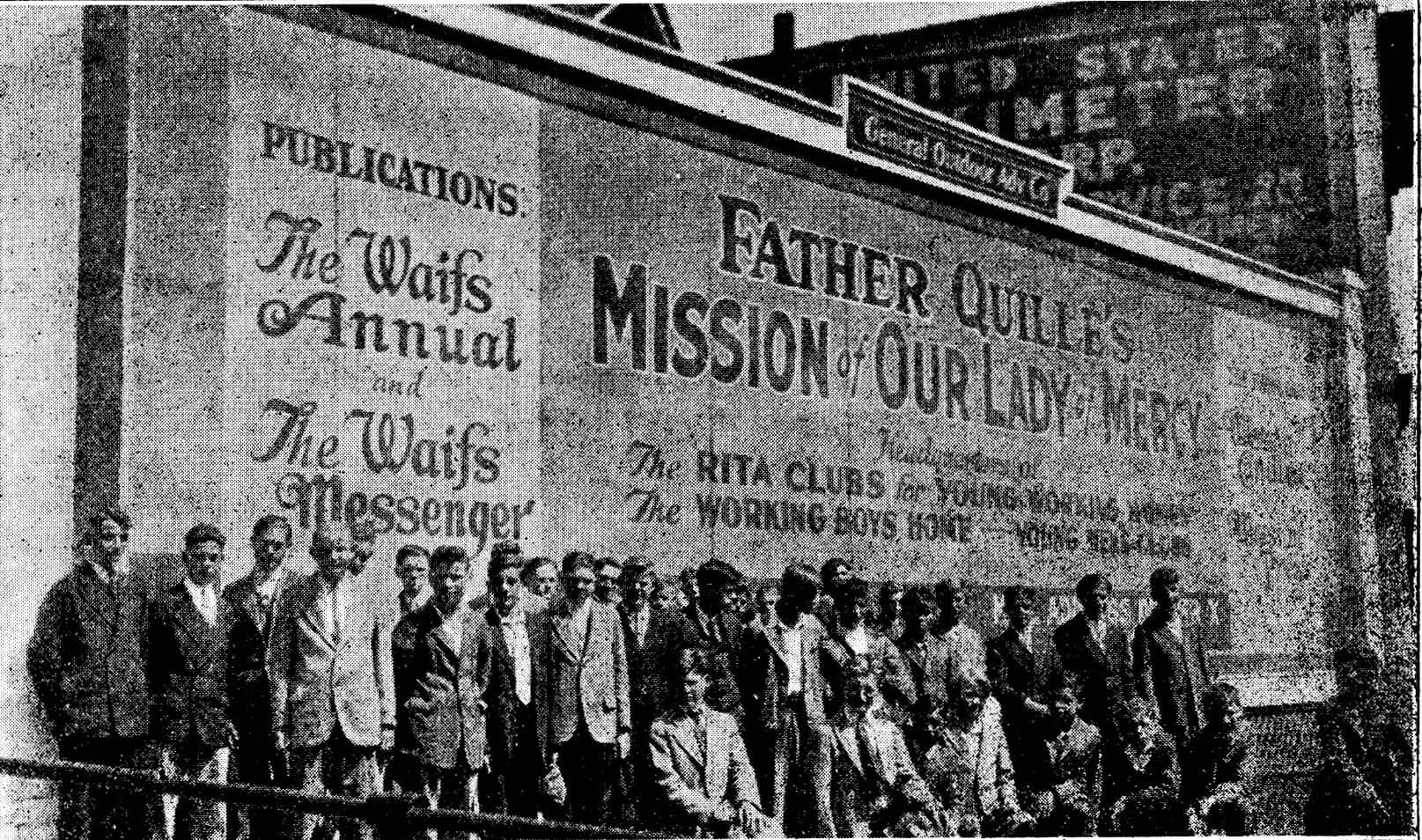
Centennial Joseph Quille succeeded the Rev. Dennis Mahoney as leader of the Mission of Our Lady of Mercy in 1906. In 1909, with funding from donors that included White Sox founder Charles Comiskey, Quille dedicated the first permanent structure to house the mission that operated out of a cluster of aging residences on West Jackson Boulevard since 1889. The multistory Chicago red-brick building was the fulfillment of Fr. Mahoney’s dream to establish a bright, modern, and spacious facility for the boys and young men in our care and formed the nucleus of the institution as it grew throughout the ensuing century.
Quille is also credited for dramatically expanding the in-house printing operation known as the Mission Press to help provide trade skills for the boys and raise needed revenue for the mission. At the same time, he launched structured vocational training so boys could leave the Home with employable skills and become permanently self‑sufficient. Under Quille’s care, young people learned trades that included shoe repair, auto and machine repair, candle making and more. The tradition of workforce preparedness established under Quille’s leadership continues today through activities and programs organized by our Education and Career Resources department, which was established by the Home’s current President Fr. Scott Donahue in 2007.
In 1915, Quille also played a ministerial role after one of the greatest disasters in U.S. history. When the S.S. Eastland overturned in the Chicago River in July 1915, Quille was among the local priests who rushed to the dock to perform last rites to victims as they were pulled from the water. History knocked on Mercy Home’s door again a few years later with the entry of the U.S. in World War I. Our archives are filled with correspondence between Fr. Quille and mission boys now in uniform, offering them connection and encouragement while fighting overseas.
In a precursor to our girls home, Quille founded the first Rita Club in 1921 a short distance from Mercy Home’s current West Loop Campus. Others followed soon after and gave hundreds of young working women a safe place to live and learn trades.
In the summer of 1926, Quille helped organize a major international event held in Chicago, the 28th Eucharistic Congress. The gathering was a milestone for Catholics in the U.S. and drew more than a million visitors. While Cardinal George Mundelein spearheaded the vision for the event, Quille served as General Secretary, and was the primary administrative and organizational leader as well as its official spokesman. In recognition for his exceptional leadership, he was elevated to Monsignor.
It was around the same time that Quille added organized athletics to the vocational programs to the formation of young men. Seizing on what had become known as the Golden Age of American sports, he founded the Mission Flashes football team in 1926, with basketball and baseball programs following shortly after.
Msgr. Quille was succeeded by his brother Rev. Albert Gustave Quille at the onset of the Great Depression, while C.J. Quille helped guide St. Ita’s Parish throughout that turbulent period. He died in 1942.
Close ×
Want more news like this?
Sign up for our email list and stay up to date with Mercy Home!
Author: Christa Rooks During this past season’s Summer Career Institute, our Education and Career Resources Department hosted three networking lunches...

Comments