April 10, 2023
For the parents of teenagers, it may not come as a surprise when your child suddenly starts spending more time alone in their room or when their moods seem as unpredictable as the weather. Many depression symptoms in teenagers may include, ongoing sadness and anxiety, and self-harm in teenagers all while dealing with the hurdles of adolescence. From final exams to the desire to fit in, they can experience burdensome emotions.
Still, as a parent, it is vital to recognize when your child is struggling with something more serious than typical teenage stress. At Mercy Home, our professional and expert coworkers are trained to recognize when mental illness in children disrupts a young person’s everyday life.
Early Warning Signs of Depression Symptoms in Teenagers
An intentional conversation could make all the difference for your child’s health and wellness if you notice:
- Your child has mood swings, low energy levels, and alienates themselves from family and friends.
- They are anxious, aggressive, argumentative, sad, or unhappy for a long time.
- They have cuts, bruises, or marks on their body due to self-injury.
- They have been drinking alcohol or using drugs.
- They have suicidal thoughts or actions.
Despite recent efforts to spread awareness about the warning signs of mental illness, many parents are still in the dark about what these behaviors look like. If your child is exhibiting these behaviors, please intervene as quickly as possible.
Next Steps for Parents
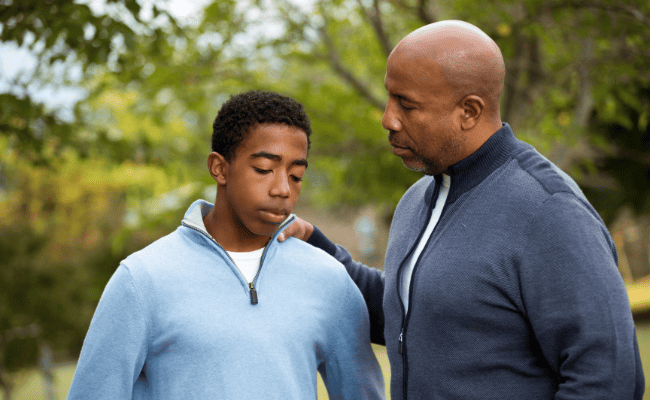
Once they know the risks and warnings of mental illness in children, parents can break through with their child by following these steps:
- Show love and support them. Let them know that you love them and want to help.
- Guide them to professional help from a therapist, doctor, life coach, etc.
- Share your feelings and emotions with them so they understand that they can trust you. Listen to them and give them positive words of encouragement.
- Encourage them to do physical activity to improve their mood.
Mercy Home therapist Edward Meredith has provided social work services to Mercy Home’s young men. He listed some of the warning signs of mental health issues that our therapists look for in our boys and girls.
“[Behaviors to notice are if they’re] always worrying, always super anxious about some stuff that’s going on… [or they’re] easily distracted,” Meredith said. “[Also, if they’re] avoiding day-to-day stuff or avoiding structural tasks that we have set in program due to anxiety.”
Before a therapist can prescribe a treatment plan, they help the child understand and accept their issues and the process of building resilience in children begins.
“It starts with acceptance … and then you can move on to treatment planning, and then you move on to the outcome, which is the treatment,” he said.
They also ask the kids questions to help them understand their behaviors and feelings.
“[We ask them], what can you do differently? Why are you feeling the way you feel? What is contributed by your sadness? Why are you feeling anxious? How would you picture the situation in order for you to be happy?”
Meredith stated that some parents do not understand their child’s current mental health, and it is important to accept their mental health before change can begin.
“Once they get a better understanding of where their kid’s at, and once they accept where their kids [are] at, [it] makes it easier for them to be a parent,” he said.
Recognizing the signs of mental illness in children is the most critical first step toward healing and building resilience in children. As caregivers, being fully attuned to changes in our children can ultimately save lives.
Source: 7 warning signs your child may be suffering from a mental illness: Inside Children’s Blog (akronchildrens.org)



Comments